Select the sealing material for the particular outdoor oven connection. A rigid brick joint and the contact of parts moving during heating require different solutions. Before choosing cement or silicone, describe the substrate material, the temperature in the gap, its geometry, and water exposure.
First, determine the task of the connection
Outdoor Oven Cement is a material for compatible external refractory joints. Once set, it does not serve as a flexible gasket. Do not use it to fill a gap designed to accommodate movement of a metal component.
Meanwhile, BLACK Fire Cement has described applications in appropriate repairs and internal connections. The fact that it is used with a hot device does not confirm the durability of a joint exposed to rain. When comparing products, list weather conditions separately from temperature.
Flexibility has its own limitations
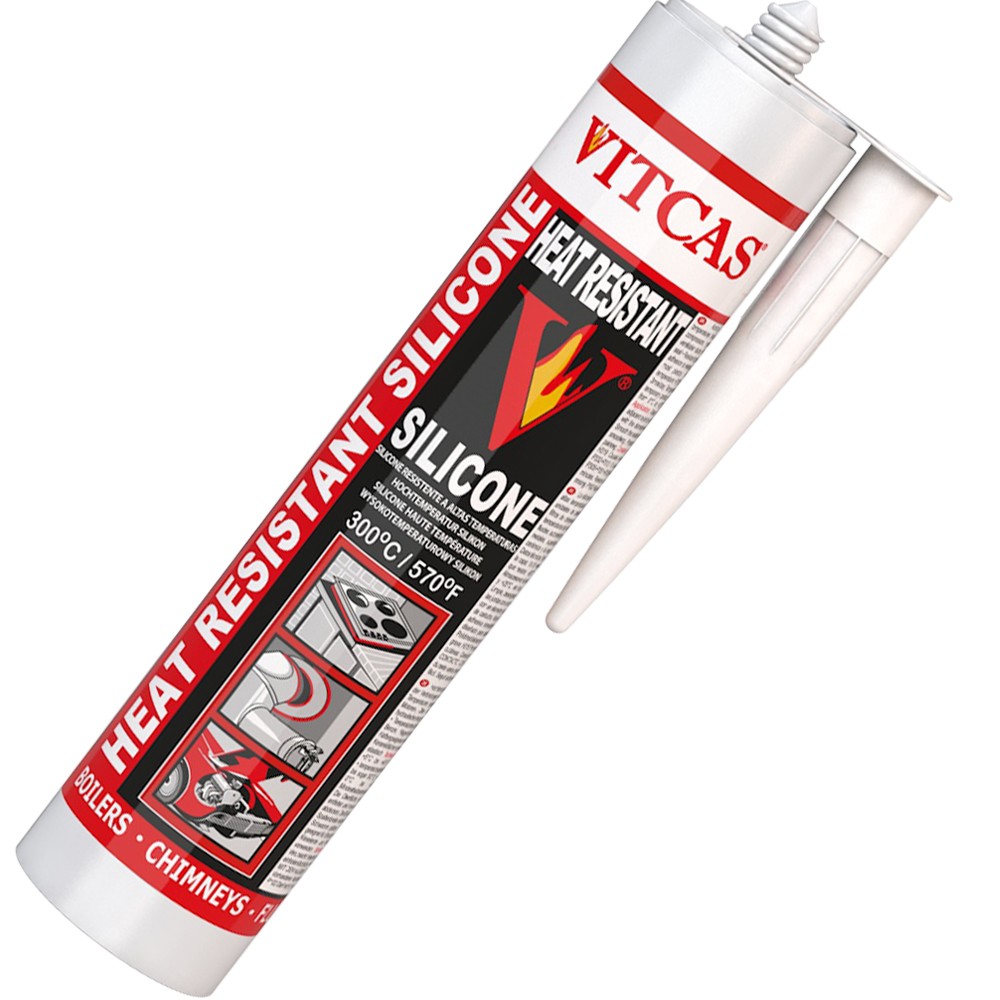
Vitcas heat resistant silicone remains flexible in compatible applications and has a declared resistance up to 315°C. It can operate in certain areas of heating appliances, yet it is not thereby a substitute for mortar in the direct flame zone.
What matters is the actual junction temperature, not the average housing temperature. Also check compatibility with metal, ceramic, or existing coating. A product that works well on one joint may not perform well on a different substrate or gap width.
Prepare the joint before application
- Determine the cause of the leak and the possibility of part movement.
- Remove material that no longer forms a proper substrate.
- Check the required cleaning and application conditions.
- Maintain the curing time and the reheating procedure.
For flues and system components, priority is given to the manufacturer-specified part. The sealant should not turn a removable part into a permanent block or obstruct required access. Keep a record of the product used so that the next repair does not involve adding a different compound to the old layer.