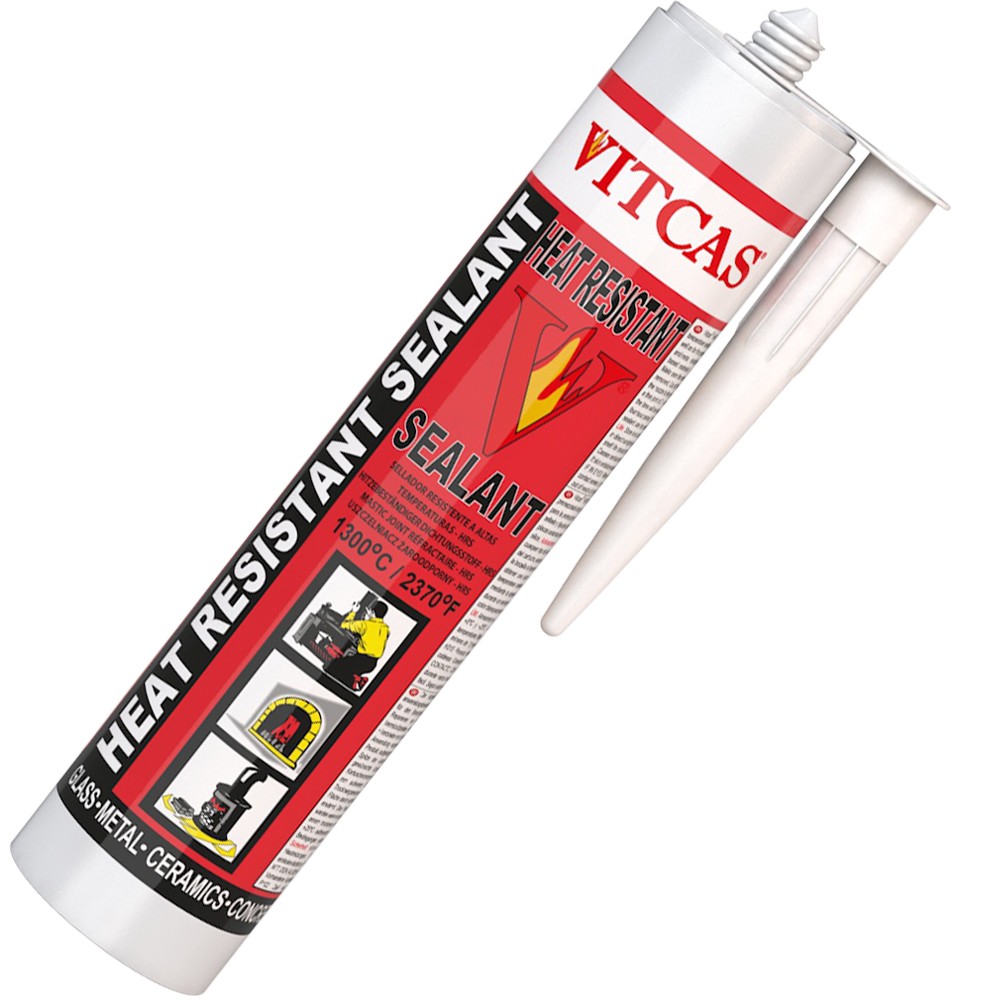
Sealant in a cartridge is convenient for a small joint, but its selection requires checking the gap and surface. HRS 1300°C is a specific product with its own instructions. Do not choose it solely as the material with the highest temperature on the shelf.
Determine the substrate and gap task
Vitcas HRS Heat Resistant Sealant has described applications for compatible ceramics, metals, glass, and silica-based materials. Record what both sides of the repair are made of. Inspect them after cooling and after removing loose residues.
Check whether the loss is limited or if it is accompanied by movement of the entire element. The sealant does not replace the assessment of the damaged support. When connecting the device, also comply with the requirements of its manufacturer.
Do not confuse cartridge products
HRS is a ready-to-use paste for application with a gun. The data sheet describes a connection with a thickness of 2–3 mm. A larger amount does not confirm the repair of any arbitrarily wide chipping, so measure the geometry before preparing the tip.
Heat Resistant Silicone is a separate silicone for appropriate flexible connections. The higher HRS temperature rating does not automatically make it have the same properties as silicone. The choice should result from the task and the instructions of the given connection.
Prepare the work without fire
Surfaces should be clean and stable, free of rust, grease, and dust that hinder adhesion. Apply the product according to its instructions and follow the required curing stages and gradual heating. Do not treat the cartridge as a fix during ongoing burning.
After preparing the system and allowing it to cool, inspect the joint line. Record the product, date, and repair photo. If the gap opens again at the same point, return to evaluating the substrate and component movement instead of applying another thick layer.