A cable penetration through a wall may require protection with specific parameters. The selection starts with the partition and installation data, not from a cartridge at hand. Passive fire protection functions as a described system; a single product is part of it.
Record the conditions of the specific location
Determine the wall construction, its thickness, and the type of service passing through it. Add dimensions of the gap, support, and required access. Identify whether you are assessing the detail with specific fire requirements or just decorative surface finishing.
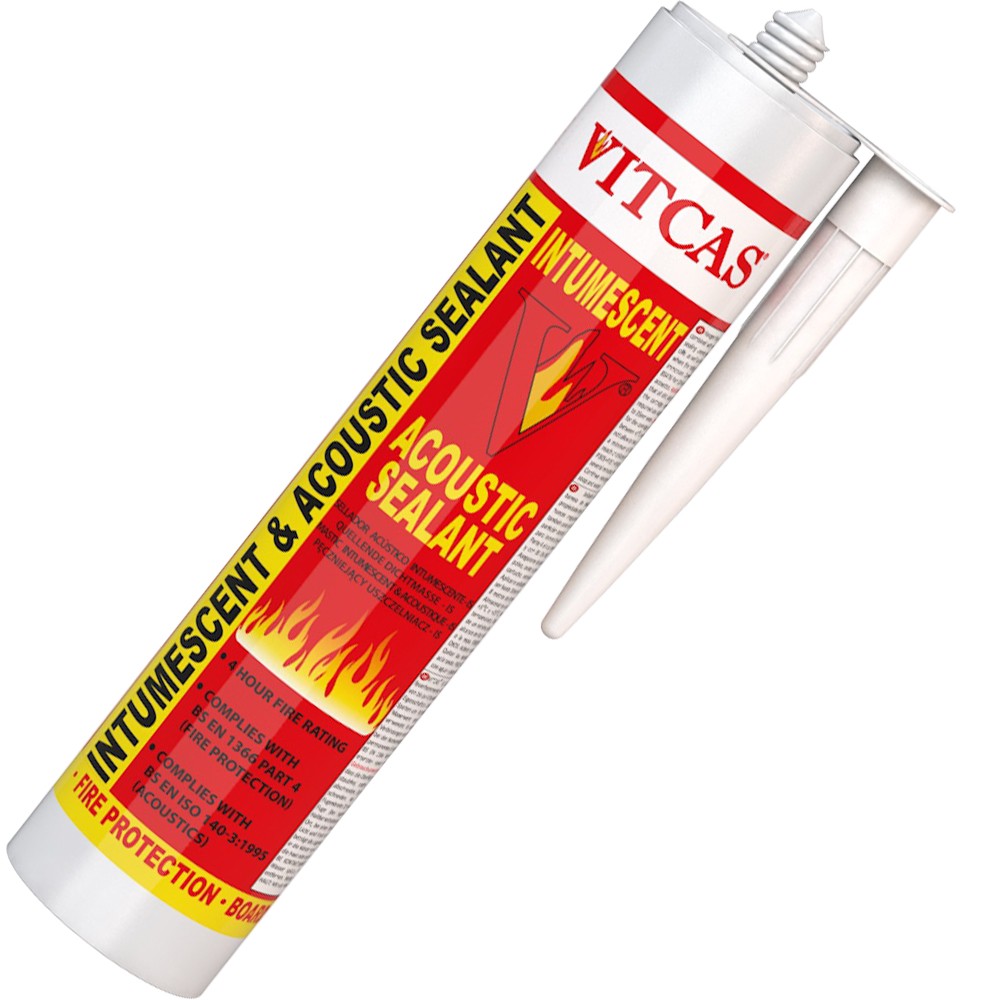
Intumescent Acoustic Sealant is an Vitcas acrylic sealant with described fire and acoustic protection tasks. The product should be selected for a compatible solution. Declarations from the datasheet should not be treated as ready parameters for any opening with a different geometry.
Compare product functions
Fire Retardant Silicone has a separate fire protection scope and different material properties. The choice should take into account the documentation of the correct system, substrate, and connection conditions. The common name "sealant" alone does not imply interchangeable use.
Heat Resistant Silicone is a different product for specific temperature-resistant connections. Such a parameter does not automatically describe the fire resistance of the entire partition. Before purchase, specify the actual safety function.
Maintain the configuration during execution
Surface preparation, geometry, and auxiliary materials should correspond to the documentation of the selected solution. Decoration must not accidentally change an essential detail. Record all parts of the system that will no longer be visible after work is completed.
Store sources, product markings, and photos before covering. Describe the scope actually confirmed for the completed location, without adding unperformed tests. After changing the installation, return to the evaluation of the complete penetration, even if the same compound remains at the edge.