During the autumn chimney inspection, it is worth describing each connection according to its function. The joint of ceramic components, flexible detail, and penetration through a partition are not the same place. Only recognizing the system allows you to assess which Vitcas product can be used in it.
Identify the flue components
Record the device, flue designation, material, and available assembly information. Add a photo of the connection with a wider frame. The visible edge of the pipe alone is not sufficient to determine the construction, support method, and required sealing.
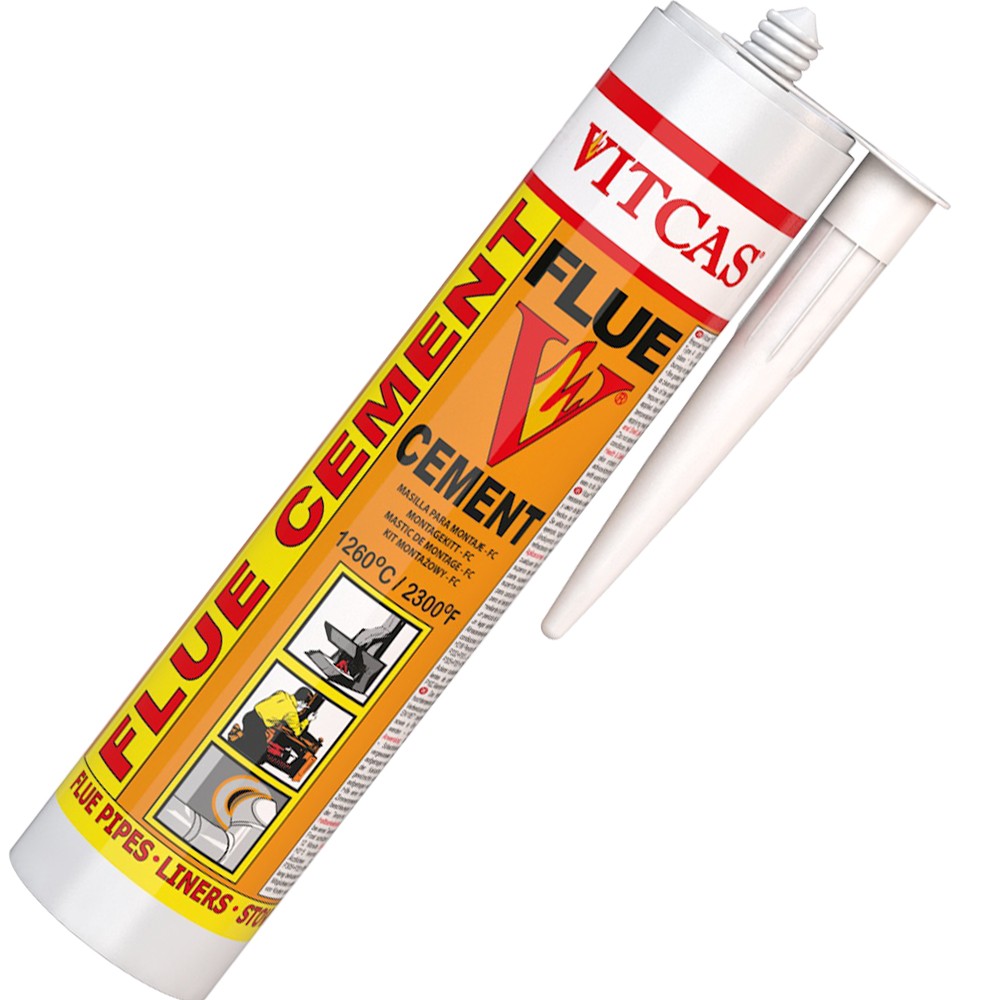
Premium Flue Cement has a described range when used with compatible ceramic chimney elements. Compare the datasheet with the system requirements and joint geometry. Do not extend this application to every metal flue just because it operates at a similar temperature.
Flexibility and fire protection are separate
Heat Resistant Silicone is intended for specific flexible connections. Selection includes the substrate, temperature, and conditions of the particular detail. The product does not independently create a complete passage through a wall or floor slab from any materials.
Fire Retardant Silicone has different tasks in fire protection. The parameters of such a protection result from the documentation of the relevant system. The name of the material does not allow assigning a ready fire resistance class to each opening.
Determine the scope before repair
A loose part, water trace, and missing joint material require investigation before applying new compound. Work is performed on a cooled system, after surface preparation. Maintain the required bond and control readiness for reuse.
Record the product at a specific location, not just the general name "chimney sealing." Keep the system markings and documentation of completed work. During the next inspection, this will allow comparing the actual detail and distinguishing the finish next to the flue from the flue connection itself.